
PALS1 (MPP5) Antibody - Western Blot Validated

BiCell Scientific
SKU:00246-WB-50UL
Couldn't load pickup availability
Scientific Overview
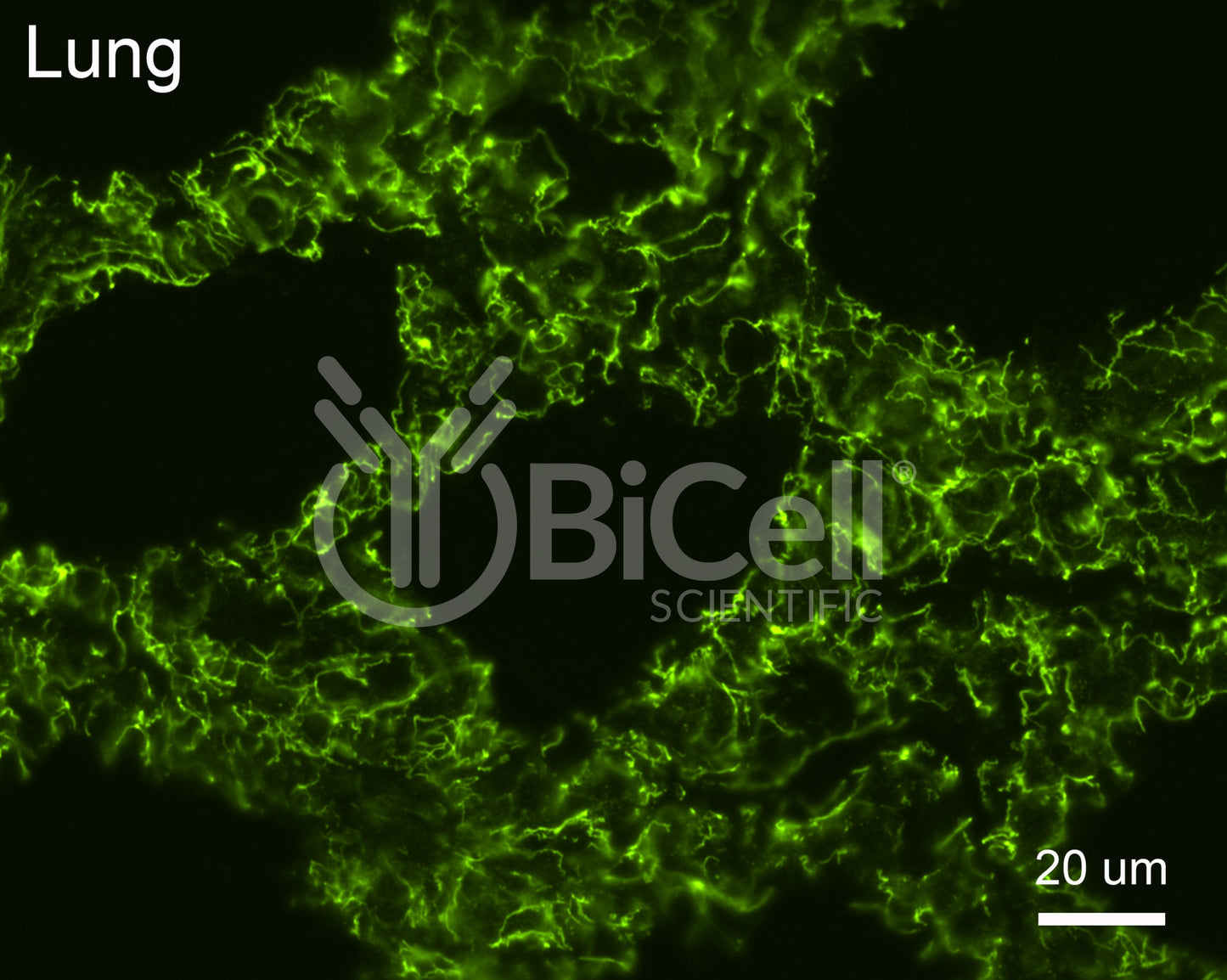
To connect mechanism with measurement, this antibody lets you assess PALS1 (MPP5) in pathway-driven studies. PALS1 is a membrane-associated component that helps organize cell-cell contacts and polarity. Many projects interpret this target alongside interacting partners, upstream cues, and downstream readouts.
Monitoring PALS1 alongside context markers can improve interpretation when phenotypes are subtle.
Research Relevance
Shifts in junction organization can accompany migration, tissue morphogenesis, and altered mechanical tension. Considering complex membership and compartment shifts can clarify whether changes reflect signaling or redistribution.
When cell-state transitions occur, this target may change alongside partners in the same compartment or pathway neighborhood.
When building a narrative around the target, it helps to track:
- co-localization patterns with cytoskeletal elements
- comparative profiling across cell states or perturbations
- subcellular redistribution at contact sites versus cytoplasm
Application-Specific Context
If your primary readout depends on denatured protein presentation, this option can streamline comparison across lanes and conditions. Think about how preparation affects epitope accessibility, and interpret patterns alongside morphology and compartment markers as needed. If signaling is transient, sampling time can be as important as condition.
When interpreting PALS1, consider whether changes track with compartment identity, cell density, or perturbation timing; these factors can influence apparent signal without implying a direct causal link.
Choose the denaturing-format format to study PALS1 (MPP5) in a way that stays anchored to pathway logic.
- Targets:
- PALS1
- Research Area:
- Cell Signaling • Developmental Biology
- Application:
- WB
- Reactivity:
- Human • Mouse • Rat
- Host:
- Rat
- Clonality:
- Polyclonal
- Isotype:
- IgG
- Immunogen:
- Synthetic peptide (18-aa) derived from the C-terminal region of human PALS1 protein
- Conjugation:
- Unconjugated
- Purification:
- Affinity Chromatography
- Concentration:
- 0.25 mg/ml
- UniProt:
- Q8N3R9
- Homology:
- Synthetic peptide sequence is identical to mouse or rat sequence
- Storage Buffer:
- PBS, pH 7.2, 0.1% Sodium Azide
- Storage Temperature:
- -20°C