
MKS3 (NPHP11 or Meckelin or TMEM67) (Xenopus) Antibody - Western Blot Validated

BiCell Scientific
SKU:90103X-WB-50UL
Couldn't load pickup availability
Scientific Overview
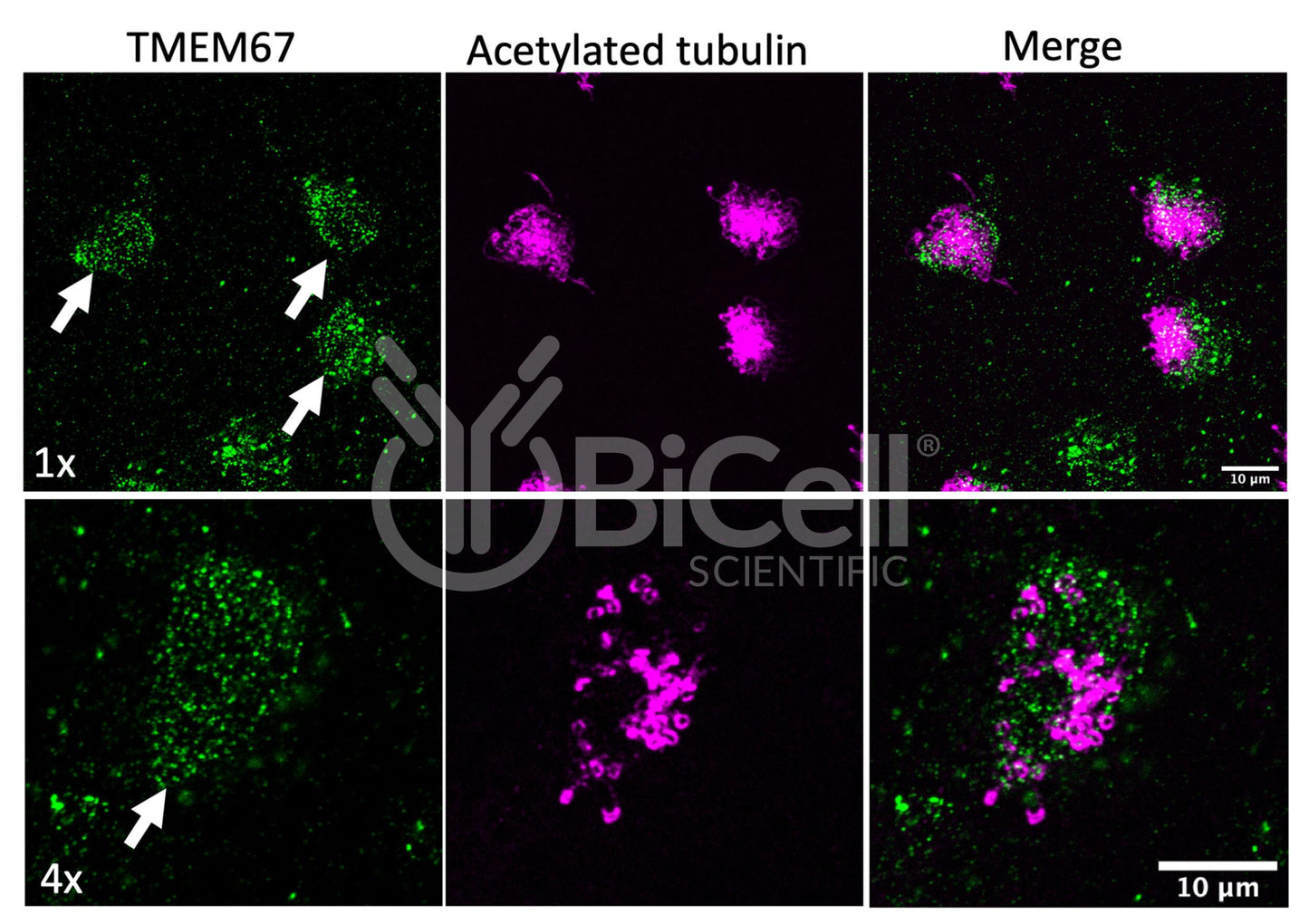
This antibody supports experimental designs that evaluate MKS3 (NPHP11) with interpretable controls and clear contrasts. MKS3 is a trafficking-related component that can localize to basal bodies and ciliary axonemes. Plan positive and negative controls that match your model system, including perturbations expected to shift the target.
In some datasets and protocols, it is referenced by the gene symbol NPHP11.
Research Relevance
Ciliary proteins are frequently assessed in relation to cell-cycle stage, serum conditions, and differentiation cues. Time course design can be decisive when regulation is transient or compartment dependent.
Because cellular networks are interconnected, changes in this target may coincide with shifts in related pathways, trafficking behavior, or structural remodeling.
When building a narrative around the target, it helps to track:
- cell-cycle linked differences in localization
- changes in cilia incidence or apparent length in perturbation studies
- signal enrichment at basal bodies versus cytoplasm
Application-Specific Context
If your primary readout depends on denatured protein presentation, this option can streamline comparison across lanes and conditions. Think about how preparation affects epitope accessibility, and interpret patterns alongside morphology and compartment markers as needed. Align controls to the expected direction of change to support confident interpretation.
For challenging targets, pairing MKS3 measurements with a second marker can clarify whether differences arise from regulation, redistribution, or shifts in cell composition within the sample.
Use the denaturing-format option to keep MKS3 (NPHP11) analysis aligned with planned contrasts and endpoints.
- Targets:
- TMEM67
- Research Area:
- Cell Cycle • Developmental Biology
- Application:
- WB
- Reactivity:
- Human • Mouse • Rat
- Host:
- Rat
- Clonality:
- Polyclonal
- Isotype:
- IgG
- Immunogen:
- Synthetic peptide (16-aa) derived from the C-terminal region of Xenopus TMEM67 protein
- Conjugation:
- Unconjugated
- Purification:
- Affinity Chromatography
- Concentration:
- 0.25 mg/ml
- UniProt:
- Q5HYA8
- Homology:
- Synthetic peptide sequence showing 75% homology to mouse sequence
- Storage Buffer:
- PBS, pH 7.2, 0.1% Sodium Azide
- Storage Temperature:
- -20°C