
GLI1 Antibody


BiCell Scientific
SKU:50703-50UL
Couldn't load pickup availability


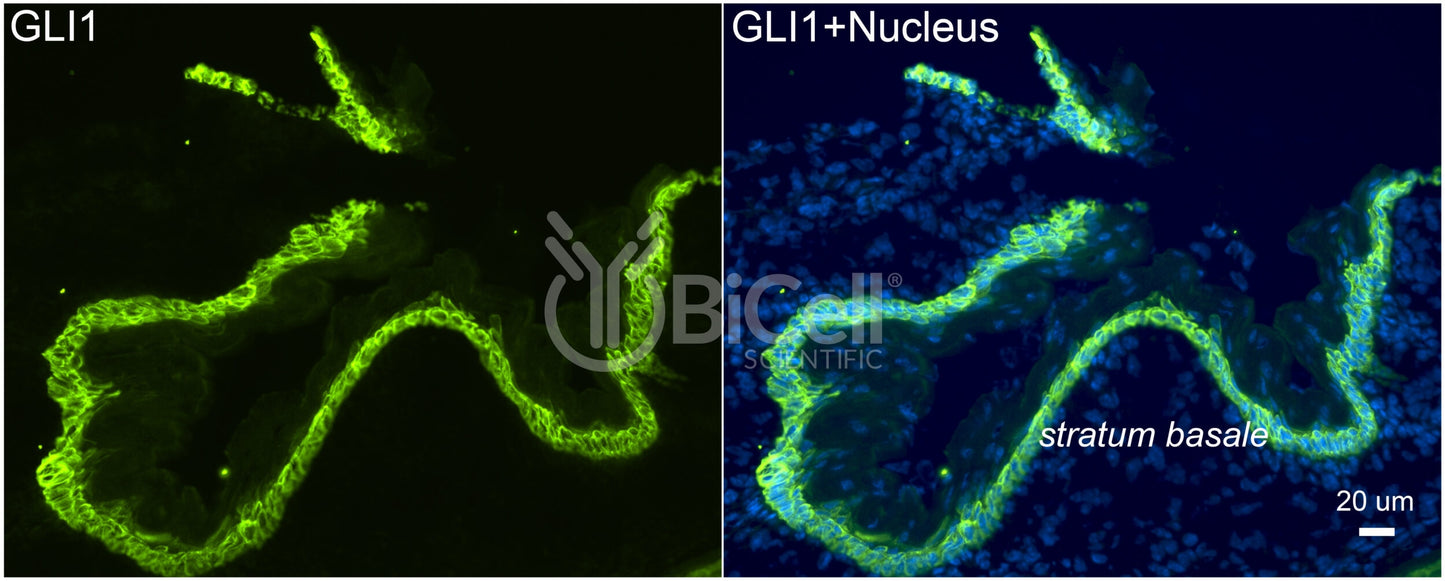
Biological Background
Bring GLI1 into view to examine changes across conditions. GLI1 is a regulator within kinase-driven cascades that influence transcriptional and metabolic responses. Focus on trends across conditions rather than single-point snapshots.
Monitoring GLI1 alongside context markers can improve interpretation when phenotypes are subtle.
Use in the Laboratory
When comparing conditions, consistent sample handling and normalization are key for meaningful contrasts. Pair measurements with orthogonal readouts when interpretation is sensitive to context.
Interpreting changes can benefit from separating expression differences from redistribution, particularly when the target cycles between compartments.
To keep datasets interpretable, labs often document:
- localization shifts between cytoplasm, membrane, and nucleus
- interaction patterns within multi-protein complexes
- time-resolved changes following stimulation or inhibition
- condition-to-condition comparisons with matched controls
Version Notes
When assay conditions are still being tuned, a regular-format antibody supports stepwise adjustment of buffers and incubation steps. If your study compares multiple conditions, keep acquisition and processing settings stable to avoid confounding.
When interpreting GLI1, consider whether changes track with compartment identity, cell density, or perturbation timing; these factors can influence apparent signal without implying a direct causal link.
To support downstream analysis, record key context variables (culture timing, stimulation window, and extraction approach) so GLI1 patterns can be compared across experiments without guesswork.
Choose the regular format option when you want GLI1 results aligned to your sample format.
- Targets:
- GLI1
- Research Area:
- Cell Signaling • Developmental Biology • Inflammation • Metabolism
- Application:
- IF • IHC • WB
- Reactivity:
- Human • Mouse • Rat
- Host:
- Rabbit
- Clonality:
- Polyclonal
- Isotype:
- IgG
- Immunogen:
- Synthetic peptide (17-aa) derived from the C-terminal region of mouse GLI1 protein
- Conjugation:
- Unconjugated
- Purification:
- Affinity Chromatography
- Concentration:
- 0.25 mg/ml
- UniProt:
- P08151
- Homology:
- Synthetic peptide sequence is identical to rat sequence (showing 88.2% homology to human sequence)
- Storage Buffer:
- PBS, pH 7.2, 0.1% Sodium Azide
- Storage Temperature:
- -20°C