
Glatiramer acetate

Selleck Chemicals
SKU:P1104-5MG
Couldn't load pickup availability
About the Target
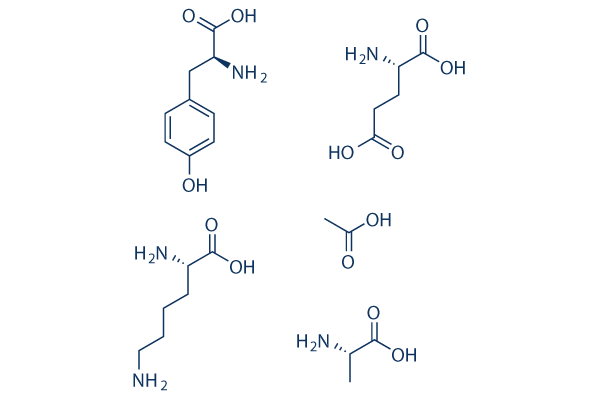
Glatiramer acetate is a synthetic copolymer composed of a random mixture of four amino acids that modifies the immune response. This entry is best anchored to Immune response modulation as a functional or pathway-level context rather than as a single UniProt-defined target. For these entries, interpretation usually centers on how the material affects assay conditions or functional biology rather than on exclusive engagement of a single genetically defined receptor or enzyme. In workflow-oriented studies, investigators often focus on sample quality, assay background, and biochemical workflow performance. This framing is especially useful in workflow-controlled studies where assay conditions need to remain consistent across comparisons.
Research Context
As an immune-modulating peptide, it is often used to shift inflammatory tone rather than to produce an all-or-none target response, so context and cell state matter for interpretation. In practice, preparation, concentration, contact time, and matched workflow controls are important for separating material effects from biological signal. Because the enrichment is not fully single-target, conclusions are usually strongest when they are framed around the intended biological process and confirmed with orthogonal markers.
- maintain matched workflow conditions so changes in assay background are not mistaken for target biology
- interpret results at the functional or systems level rather than as evidence of exclusive single-target binding
- use consistent preparation, exposure, and handling steps across comparative experiments
Experimental interpretation should therefore connect early pathway changes with later phenotypic outputs, rather than relying on a single endpoint in isolation.
Format Considerations
Using the regular format helps keep comparative experiments aligned, especially when the same signaling question is being tested across multiple models or readout platforms. In comparative workflows, keeping the listed acetate format constant across comparator groups can reduce avoidable formulation-related differences. This is particularly helpful for comparative experiments, benchmark studies, and orthogonal validation in which small differences in formulation or handling can complicate interpretation. For peptide-centered workflows, conclusions are usually strongest when biological readouts are paired with consistent preparation and appropriately matched reference conditions.
- CAS No.:
- 147245-92-9
- Molecular Weight:
- 623.65
- Formula:
- C₂₅H₄₅N₅O₁₃
- Storage Temperature:
- -20°C
For Research Use Only. Not intended for diagnostic or therapeutic use.
Products may be subject to intellectual property rights.
The purchase of this product does not grant any license for commercial use, manufacturing, or clinical applications. The user is responsible for ensuring compliance with applicable laws and third-party rights.