
BCL2 Antibody - FFPE Validated

BiCell Scientific
SKU:10250-FFPE-50UL
Couldn't load pickup availability
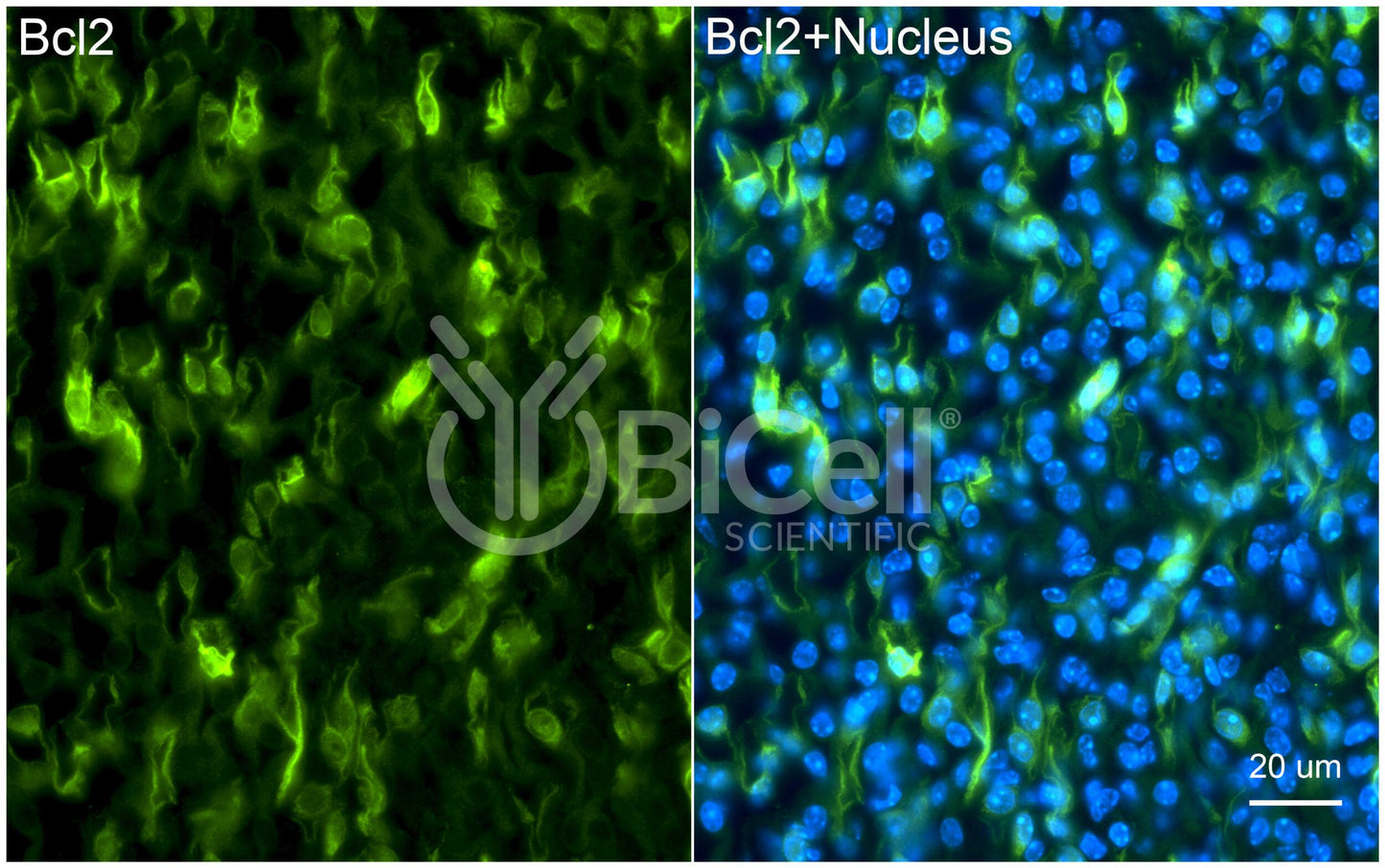
Protein Function
To connect mechanism with measurement, this antibody lets you analyze BCL2 in pathway-driven studies. BCL2 is a cellular protein that can be tracked to understand expression patterns and compartmental behavior. Many projects interpret this target alongside interacting partners, upstream cues, and downstream readouts.
Tracking BCL2 can clarify whether changes reflect regulation, redistribution, or altered complex assembly.
Experimental Applications
Integrating localization with abundance measurements can clarify whether changes reflect trafficking or regulation. Considering complex membership and compartment shifts can clarify whether changes reflect signaling or redistribution.
Many workflows benefit from tracking both signal intensity and compartment distribution, especially when the target participates in multi-protein assemblies.
Common experimental questions that benefit from target tracking include:
- cross-sample normalization strategies
- subcellular compartment mapping
- baseline versus stimulated condition comparisons
Workflow Perspective
Because fixation can mask epitopes, fixed-section oriented formats aim to maintain recognition after standard deparaffinization and retrieval steps. To keep comparisons consistent, align sample preparation steps and define a clear baseline for each series. If interactions are a focus, consider parallel readouts for key partners.
To support downstream analysis, record key context variables (culture timing, stimulation window, and extraction approach) so BCL2 patterns can be compared across experiments without guesswork.
To support downstream analysis, record key context variables (culture timing, stimulation window, and extraction approach) so BCL2 patterns can be compared across experiments without guesswork.
Choose the fixed-section format to study BCL2 in a way that stays anchored to pathway logic.
- Targets:
- BCL2
- Research Area:
- Apoptosis • Cancer • Metabolism
- Application:
- IHC-P
- Reactivity:
- Human • Mouse • Rat
- Host:
- Rat
- Clonality:
- Polyclonal
- Isotype:
- IgG
- Immunogen:
- Synthetic peptide (17-aa) derived from the N-terminal region of mouse BCL2 protein
- Conjugation:
- Unconjugated
- Purification:
- Affinity Chromatography
- Concentration:
- 0.25 mg/ml
- UniProt:
- P10415
- Homology:
- Synthetic peptide sequence is identical to rat sequence (showing 94.1% homology to human sequence)
- Storage Buffer:
- PBS, pH 7.2, 0.1% Sodium Azide
- Storage Temperature:
- -20°C