
3,4-Dihydroxybenzaldehyde

Selleck Chemicals
SKU:S3952-25MG
Couldn't load pickup availability
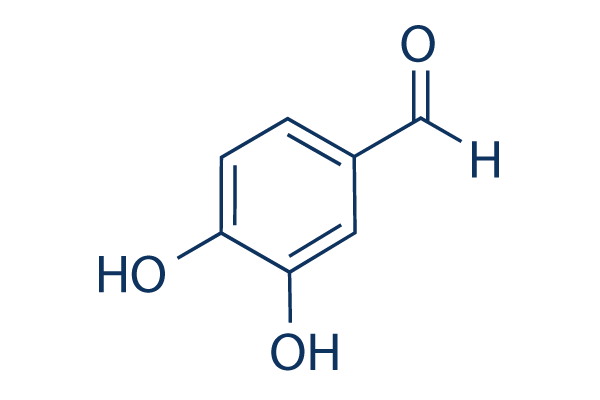
3,4-Dihydroxybenzaldehyde is a chemically defined research compound used in biochemical and cell-based models. In practice, this places the compound in experiments that measure compound-linked biochemical, transcriptional, and phenotypic responses in biochemical and cell-based models. Dose-response comparison, orthogonal validation, and secondary assay follow-up can further sharpen mechanistic interpretation.
Detailed primary target and pathway annotations are limited for 3,4-Dihydroxybenzaldehyde, so it is best used as a defined chemical or biochemical reference in comparative assay systems. This framing is appropriate for concentration-response testing, orthogonal controls, and follow-up characterization across biochemical and cell-based formats. When a fully resolved mechanism is unavailable, parallel readouts such as viability, reporter activity, morphology, localization, or biochemical conversion can still help position the compound experimentally.
Research Applications
- Comparative biochemical and cell-based profiling
- Concentration-response experiments with orthogonal readouts
- Assay development and reference-compound benchmarking
- Follow-up characterization of context-dependent phenotype changes
Overall, 3,4-Dihydroxybenzaldehyde is appropriate for comparative profiling, concentration-response testing, and follow-up characterization in biochemical and cell-based models. This profile is suited to mechanistic follow-up, comparative profiling, and assay optimization under defined exposure conditions.
- CAS No.:
- 139-85-5
- Molecular Weight:
- 138.12
- Formula:
- C₇H₆O₃
- SMILES:
- C1=CC(=C(C=C1C=O)O)O
- InChIKey:
- IBGBGRVKPALMCQ-UHFFFAOYSA-N
- PubChem:
- 8768
- Storage Temperature:
- -20°C
For Research Use Only. Not intended for diagnostic or therapeutic use.
Products may be subject to intellectual property rights.
The purchase of this product does not grant any license for commercial use, manufacturing, or clinical applications. The user is responsible for ensuring compliance with applicable laws and third-party rights.