
10nm Standard Gold Nanoparticles

Cytodiagnostics
SKU:G-10-20
Couldn't load pickup availability
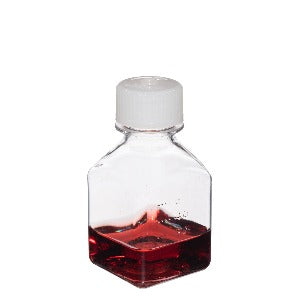
For assay teams comparing nanoparticle options for localized surface plasmon resonance (LSPR), nanoparticle conjugation, lateral flow assay development, and immunoassay development, the 10 nm gold nanoparticles format keeps selection focused on particle material, size, shape and chemistry.
Gold nanoparticles are widely used as plasmonic labels and conjugation scaffolds because their optical response, surface chemistry and particle size can be matched to assay, imaging or sensor formats. The listed absorption maximum of 515-520 nm can help compare this size with related gold nanoparticle options.
The citrate-stabilized colloidal format is commonly used for passive adsorption of proteins and other ligands to the nanoparticle surface. It is well aligned with assay development, lateral flow, immunoassay and electron microscopy workflows when those applications are listed.
The supplied description notes controlled particle sizing and dynamic light scattering assessment of size and monodispersity. That context is useful for assays where optical response, conjugate behavior or particle-size comparisons need to be reproducible.
The application profile includes localized surface plasmon resonance (LSPR), nanoparticle conjugation, lateral flow assay development, immunoassay development, biosensing, and electron microscopy. These terms reflect the supported scientific workflows for this listing and help scientists compare related products by use case, not by material alone.
The small particle size is useful when compact labels, high particle number or minimal steric footprint are important selection factors.
For gold nanoparticle workflows, compare standard, stabilized, reactant-free, endotoxin-free and functionalized versions according to the application. The same size can behave differently depending on the surface chemistry and formulation.
For procurement and product selection, compare it with related nanoparticles by particle size, surface chemistry, formulation and listed application rather than treating all nanoparticles as interchangeable.
Application areas
- Nanoparticle conjugation with supported proteins, ligands or biomolecules
- Lateral flow assay development and rapid-test component optimization
- Immunoassay development, immunostaining or related antibody-based formats
- Biosensing and optical sensor development
- Localized surface plasmon resonance (LSPR) sensing and optical nanoparticle studies
- Research Area:
- Plasmonics • Biosensing • Bioassay Development
- Application:
- Biofunctionalization • Plasmonics • Biosensors
- Purity:
- >95% Reactant Free
- Formulation:
- 0.1mM Phosphate Buffered Saline (PBS)
- Adsorption Max:
- 515-520nm
- Core Size:
- 10nm
- Particles per ml:
- 5.98E+12
- Shape:
- Spherical
- Material:
- Gold
- Surface Chemistry:
- Tannic Acid
- Storage Temperature:
- 4°C